
Maintaining office carpets and floors in Canberra and Tuggeranong requires regular vacuuming and appropriate surface cleaning. Businesses should also address spills promptly and arrange periodic detailed maintenance. Suitable cleaning methods help preserve flooring appearance and support workplace cleanliness.
Why Is Office Floor Cleaning Important?
Office floors experience constant activity during working hours.
Employees and visitors bring dust, dirt, and moisture into buildings.
These materials can accumulate across carpets and hard surfaces.
Regular maintenance helps workplaces remain presentable.
It also supports safer movement by addressing visible spills and debris.
Important benefits include:
- Cleaner carpets with reduced loose dirt.
- Maintained hard floors with appropriate surface care.
- Professional presentation in reception and meeting areas.
- Improved maintenance routines across busy spaces.
- Prompt spill management to address potential slipping hazards.
Businesses should select cleaning procedures that suit their flooring materials.
How Should Office Carpets Be Cleaned?
Carpets require consistent maintenance because fibres can trap dust and debris.
Vacuuming helps remove loose surface materials.
However, heavily used areas may need additional attention.
Regular Carpet Vacuuming
High-traffic areas often require frequent vacuuming.
Entrance carpets and corridors may collect more dirt than private offices.
Cleaning schedules should reflect these differences.
Carpet Stain Management
Spills should receive prompt attention.
However, unsuitable products can damage carpet fibres or cause discolouration.
Cleaning staff should follow manufacturer recommendations.
Specialist assistance may be necessary for difficult stains.
Periodic Carpet Deep Cleaning
Routine vacuuming cannot remove every embedded contaminant.
Periodic specialist treatment may help maintain carpet appearance.
Cleaning frequency depends on carpet condition and workplace activity.
How Should Hard Office Floors Be Maintained?
Hard flooring includes several materials with different cleaning requirements.
Vinyl, tile, laminate, and timber surfaces may require different products.
Sweeping and Dust Removal
Loose debris should be removed before wet cleaning.
Appropriate tools help prevent unnecessary surface scratching.
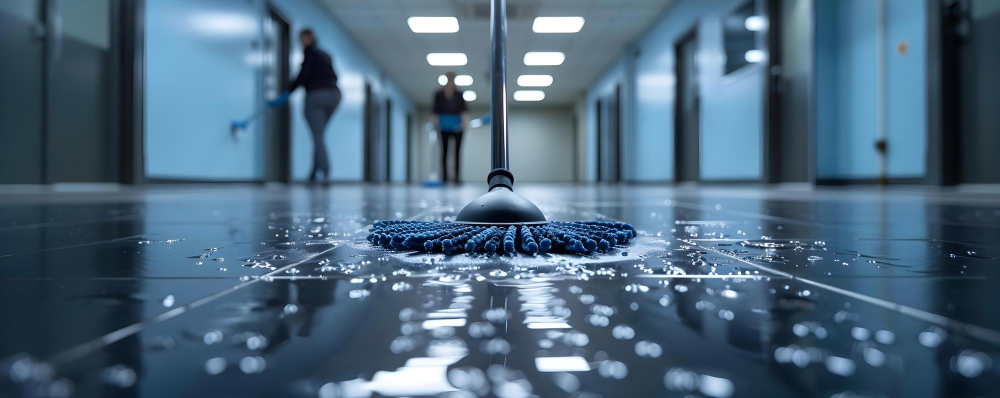
Mopping and Surface Cleaning
Mopping methods should suit the flooring material.
Excessive moisture can damage certain surfaces.
Cleaning staff should follow product instructions and manufacturer guidance.
Managing Wet Floor Hazards
Wet surfaces can create slipping risks.
Suitable warning signs and access controls may be necessary.
Floors should be allowed to dry appropriately.
How Often Should Office Floors Be Cleaned?
Cleaning frequency depends on workplace activity.
Busy entrances may require daily attention.
Private offices may need different maintenance intervals.
Businesses should consider:
- Daily foot traffic.
- Flooring materials.
- Weather-related dirt.
- Workplace occupancy.
- Existing floor condition.
These factors help determine appropriate cleaning schedules.
Can Entrance Mats Reduce Office Floor Dirt?
Entrance mats help collect some dirt and moisture before people enter.
They can support routine floor maintenance.
However, mats require regular cleaning themselves.
Damaged or poorly positioned mats may introduce tripping hazards.
Businesses should inspect their condition periodically.
When Should Businesses Request Professional Floor Cleaning?
Professional cleaning may be useful when routine maintenance becomes insufficient.
Carpet staining and heavily soiled flooring may require specialist attention.
Businesses should confirm suitable treatment methods before arranging services.
Cleaning in Canberra and Tuggeranong should reflect flooring materials and workplace conditions.
Jo Pro Cleaning can be contacted to discuss available carpet and floor cleaning services.
References and Further Reading
Safe Work Australia provides guidance on managing slips, trips, and workplace hazards.
WorkSafe ACT also publishes information about maintaining safer working environments.